
Kareo vs eClinicalWorks: Which Platform Handles Claims Faster in 2025
Choosing the right billing platform affects your cash flow. Every clinic wants fewer denials, faster payments and simple tools that help teams work with confidence.
Kareo vs eClinicalWorks are two popular options in the medical billing world. Both are powerful, but they work in different ways.
This guide breaks down how each platform handles claims, reports, automation and overall speed. It also explains which practice types benefit most from each system.
If you offer medical billing services, or plan to upgrade your billing software, this comparison will help you make a clear decision. You can always Get a Free Audit of your current workflow to see what fits best.
Overview of Kareo
Kareo is designed for small and mid sized practices. It offers practice management, EHR and a simple billing workflow in one place. Many staff members like Kareo because the screens feel familiar. It is easy to adjust, and new billers learn it quickly.
Kareo offers scheduling, charge capture, claim scrubbing and payment posting. It connects with major clearinghouses and supports many specialties including family medicine, pediatrics, cardiology, mental health, orthopedics and more.
This makes it a strong option for clinics that want reliable billing without heavy setup work. Billing companies also like Kareo. Switching between multiple clients is simple, and task queues stay organized. For anyone offering medical billing services , Kareo is a helpful all in one solution.
Overview of eClinicalWorks
eClinicalWorks began as an EHR platform. It expanded later into revenue cycle tools. Today it includes scheduling, documentation, and full billing functions. Multi provider clinics choose it for its clinical strength and detailed tools.
From a billing angle, eClinicalWorks offers charge capture, scrub rules, ERAs, denial queues and flexible reporting. It is also cloud based, so teams can work from anywhere.
Many larger clinics hire analysts because eClinicalWorks has deep configuration options. This helps groups with complex setups or large patient volumes.
Claim Speed in Kareo vs eClinicalWorks
Claim speed depends on eligibility checks, coding support, scrub rules and payment posting. Kareo keeps claim movement at the center of the workflow. Charges flow directly from the encounter.
Staff can review, update and submit claims in a few steps. Eligibility checks and scrub rules catch many errors early. This reduces denials and speeds up payment.
eClinicalWorks also supports fast movement, but it performs best when rules are customized. Charges can flow from the visit note and the system checks for common errors.
When organizations fine tune these rules, claim volume can move very quickly. Smaller clinics may not use the full power of the system.
In most real world reviews, small clinics say Kareo is faster to stabilize. Larger clinics with analysts say eClinicalWorks becomes extremely strong once fully configured.
Reporting and Visibility in Kareo vs eClinicalWorks
Kareo provides simple dashboards that show aging, collections and claim status. Owners can see what is pending, which payers are slow and how the team is performing.
This helps small clinics run light accounting tasks inside the platform. Many users treat it like a simple billing management software.
eClinicalWorks offers deeper reporting. Finance teams can build custom reports for payer trends, denial categories and multi location comparisons.
This is ideal for groups that treat revenue as a data project. Smaller practices may find it too complex.
If you want clear and quick reporting, Kareo feels easier. If you want deep analytics, eClinicalWorks offers more flexibility.
Pricing and Value of Kareo vs eClinicalWorks

Pricing for both systems depends on provider count and service level. Kareo usually charges subscription fees per provider. Billing companies using Kareo sometimes use blended pricing when pairing software with medical billing services.
eClinicalWorks often fits groups that are ready to invest in technology and configuration. It becomes cost effective when the clinic uses both clinical and billing tools. For very small offices, the cost and setup can feel high.
Both systems position themselves as top options in the best medical billing software category. The right choice depends on your goals and team size.
Best Fit by Practice Type
Small primary care clinics, pediatrics and general practices often choose Kareo. Staff can manage check in, charges and claims without long training. For companies offering medical billing services for small practices, Kareo is a strong choice.
Multi specialty groups and clinics with complex workflows prefer eClinicalWorks. Its configuration options support detailed documentation and multiple care programs.
Mental health groups use both systems. Some providers prefer platforms built just for behavioral health because they focus on session based workflows.
Legal offices sometimes search for billing tools, but Kareo and eClinicalWorks are not designed for legal invoicing. They are made for medical claims only.
Both platforms integrate with outside accounting systems. Many teams export summarized data for general ledger tasks.
Market Position of Kareo vs eClinicalWorks
Kareo is popular among small and mid sized practices. It is known for friendly screens and simple setup. Many users rate it highly in lists of top medical billing software.
eClinicalWorks is common in large ambulatory networks. It supports clinical needs and strong billing workflows. For clinics that want one system for both documentation and claims, eClinicalWorks is a strong match.
Both systems work in the cloud. No local servers are required. Vendors handle updates and teams can work from different locations without losing connection.
Working With a Billing Partner
Even with strong software, many clinics struggle with payer rules, denials and coding changes. A professional billing partner helps solve these problems.
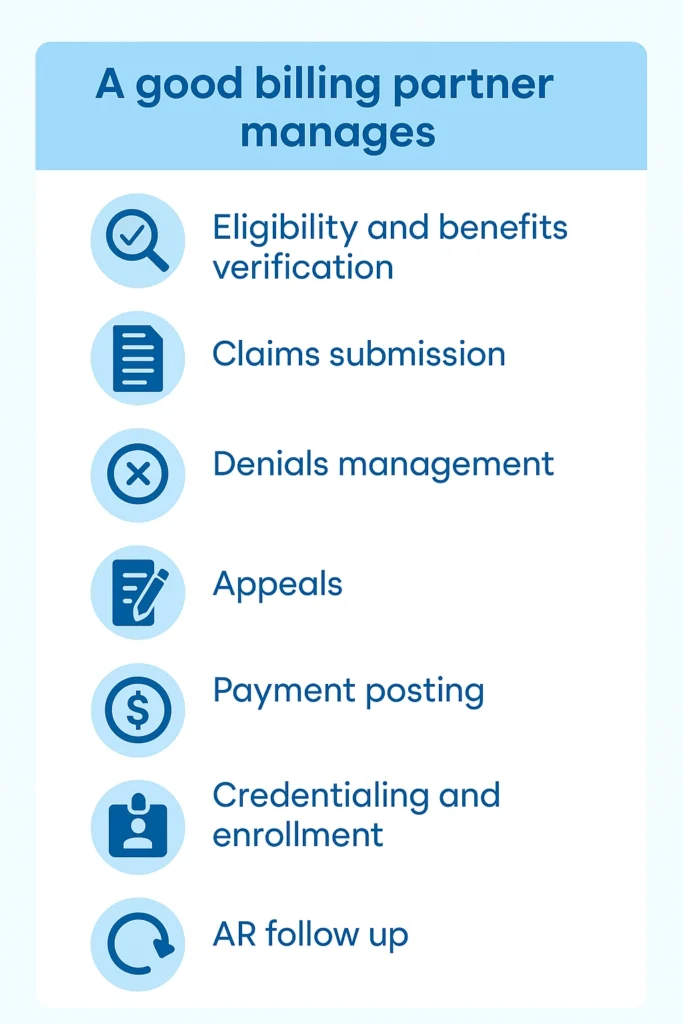
A team offering medical billing services in illinois can log into Kareo or eClinicalWorks and manage charge review, follow ups, AR clean up and appeals. They use the software as a tool and handle the heavy work for you.
If you want to improve claim speed without hiring more staff, consider using a billing company. You can also Get a Free Audit to check if your system is set up correctly.
Many clinics lose revenue because scrub rules are not updated or payers are not configured properly.
Final Verdict: Which Platform Is Faster
So which platform handles claims faster for most clinics. For small practices, Kareo is usually faster. It has simple screens, quick setup and built in automation. Staff can move claims from visit to payment without many steps.
For larger organizations, eClinicalWorks can reach very high claim speed once configured. Its power comes from deep rules, detailed workflows and custom reporting.
Both systems deserve their strong reputation in the best medical billing software category. Your choice depends on staff size, specialty and how much customization you want.
If you want a simple system that works out of the box, choose Kareo. If you want a flexible system that grows with your clinic, eClinicalWorks is a strong match.
To find the right fit for your practice, you can also Get a Free Audit or request a quote today. If your clinic needs support, you can explore medical billing services, revenue cycle management, medical coding, credentialing and enrollment, and more.